
Early Years and Diplomatic Career
Salem Muhammad Beyk Azzam came from a family of prestige, politics, and activism. His father, the late Muhammad Bey Azzam was part of the Executive Committee of the Nationalist Wafd Party and more broadly the Azzam family was both an aristocratic and traditional Arab family sourcing its roots to Castle Shawbak in Jordan until their migration to Egypt with Salah-ad-Din.
Introduction
The young Salem Azzam was a protégé of his paternal Uncle Abdul’Rahman Azzam, the founding Secretary General of the Arab League, Pan-Arabist ideologue and veteran of the Libyan and Balkans wars. Azzam Pasha was thus known as the ‘Guevara of the Arabs’, a stark opponent of Zionism, proponent of Arab-Islamic Unity, and was the organiser of Malcolm X’s Hajj, he would regard him as a ‘father’ figure in his autobiography. Azzam Pasha would later take Salem Azzam as his political disciple. From his Mother’s side he was descended from the land-owning al-Saudi family. Despite their aristocratic and elitist background, they were a traditional Arab Islamic family who, unlike other elites, were not collaborationist with colonialism – in-fact, they funded the Urabi Pasha uprising against the British in the late 19th century.
His father, Muhammad Bey Azzam, was a Member of Parliament and of the Executive Committee of the Wafd Party, the leading political party at the time. His elder brother (he was one of 12 children, eight boys and four girls) was the famous literary scholar and diplomat Dr. Abd-al-Wahhab Azzam, perhaps best known for his translation of Iqbal’s poetry into Arabic as well as for his own Sufi compositions. Salem Azzam’s Uncle Abd-Al-Rahman Azzam was awarded the title of Pasha by the Egyptian King and later went on to found and become the first Secretary General of the Arab League. He was perhaps best known as a champion in the Egyptian Parliament for helping poorer Muslim nations. On his maternal side, Salem Azzam was a grandson of Sheikh Khalaf al-Saudi, a scion of one of the largest landowning families in Egypt. However, Azzam’s family was not simply one of affluence, it was also a family of a long and distinguished record of service to the Muslim Ummah and struggle against colonialism. His uncle Abd-Al-Rahman Pasha had fought for the Ottoman Caliphal armies in the Balkans and in the struggle in Libya establishing a political party, while his maternal family the al-Saudi had financed the Urabi Pasha rebellion against foreign influence in Egypt in 1882.
Born on the 8th of July 1924, it was in the shade of British colonialism, the abolishment of the Caliphate and the colonialisation and westernisation of Muslim societies, that young Salem Azzam grew up. His strong ideals and religiosity were fostered by his late mother Zubayda al Saudi and his father Muhammad Bey would allow the Hilwan estate in which he grew up in to be used for the meeting of the radical Islamic nationalist Masr al Fattah group. It was in the Hilwan suburb that Salem Azzam grew up and in which resided the great Islamic thinker and martyr of the contemporary Islamic Movement, Sayyid Qutb, along with his family. Salem Azzam would later come to know Sayyid Qutb personally and stated he became his student. The link with Sayyid Qutb was familial and Salem Azzam’s relative Mahfouz Azzam, vice-president of the Islamic Labour Party, would later serve as Qutb’s lawyer. Qutb would predict Salem Azzam would be a leading figure in the National and Islamic Movement. Salem’s older brother was the late poet Abdul’Wahab Azzam was the Egyptian Ambassador to Pakistan, translated Iqbal into Arabic, was the founding rector of Saudi’s first university – King Saud University between 1957-1959. He had a particular interest in Sufism and had relations with the Islamic Movement.
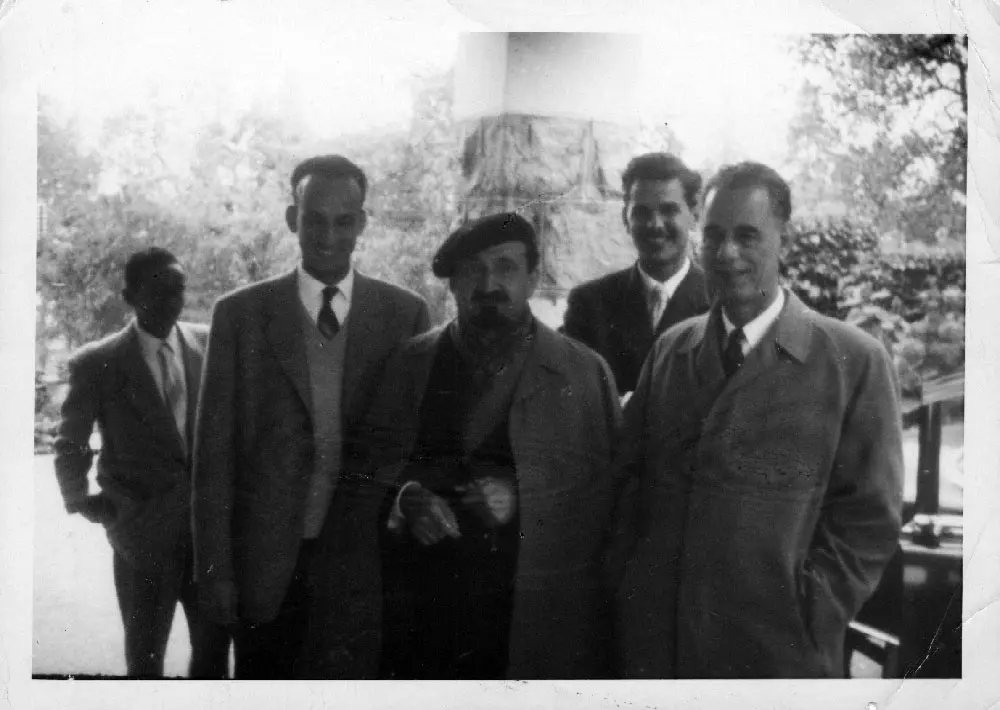
With Abdul Rahman Azzam Pasha
Early Years
Growing up Salem Azzam was particularly active in opposition to the British colonialisation of Egypt organising rallies at school against the occupation. He was also recalled as giving a stirring speech from atop the rubbish bins during this period against the British as well as graffiti against British military presence in Egypt. At one point the demonstration he was leading was attacked by cavalry, whilst others fled Salem Azzam stood his ground throwing the officer from his horse, yet when the officer was being beaten by fellow demonstrators, Salem intervened to stop them. At one stage Salem Azzam clambered on the gate of the Royal Palace demonstrating the Monarchy and colonialism. Following his time at school Ustadh Salem Azzam studied law at King Fuad University in Cairo and graduated in 1958 and continued his opposition to colonialism resulting in his denial to hold his final exams for 2 consecutive years. His university career concluded with Ustadh Salem’s exile in 1949 due to a riot which nearly resulted in the pro-British Dean being thrown from his balcony had it not been for the intervention of Ustadh Salem who did not want to shed the blood of the Dean despite his opposition to British colonialism.
Gallery
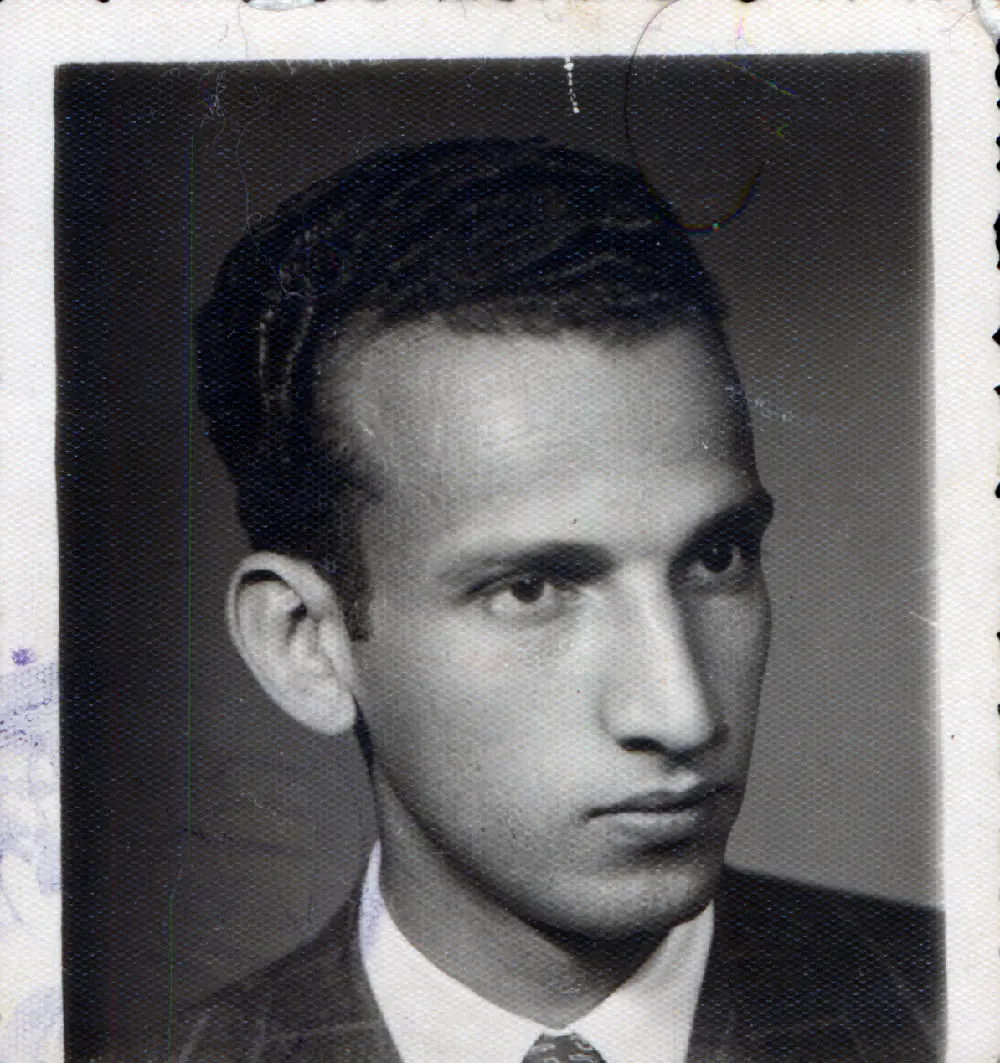
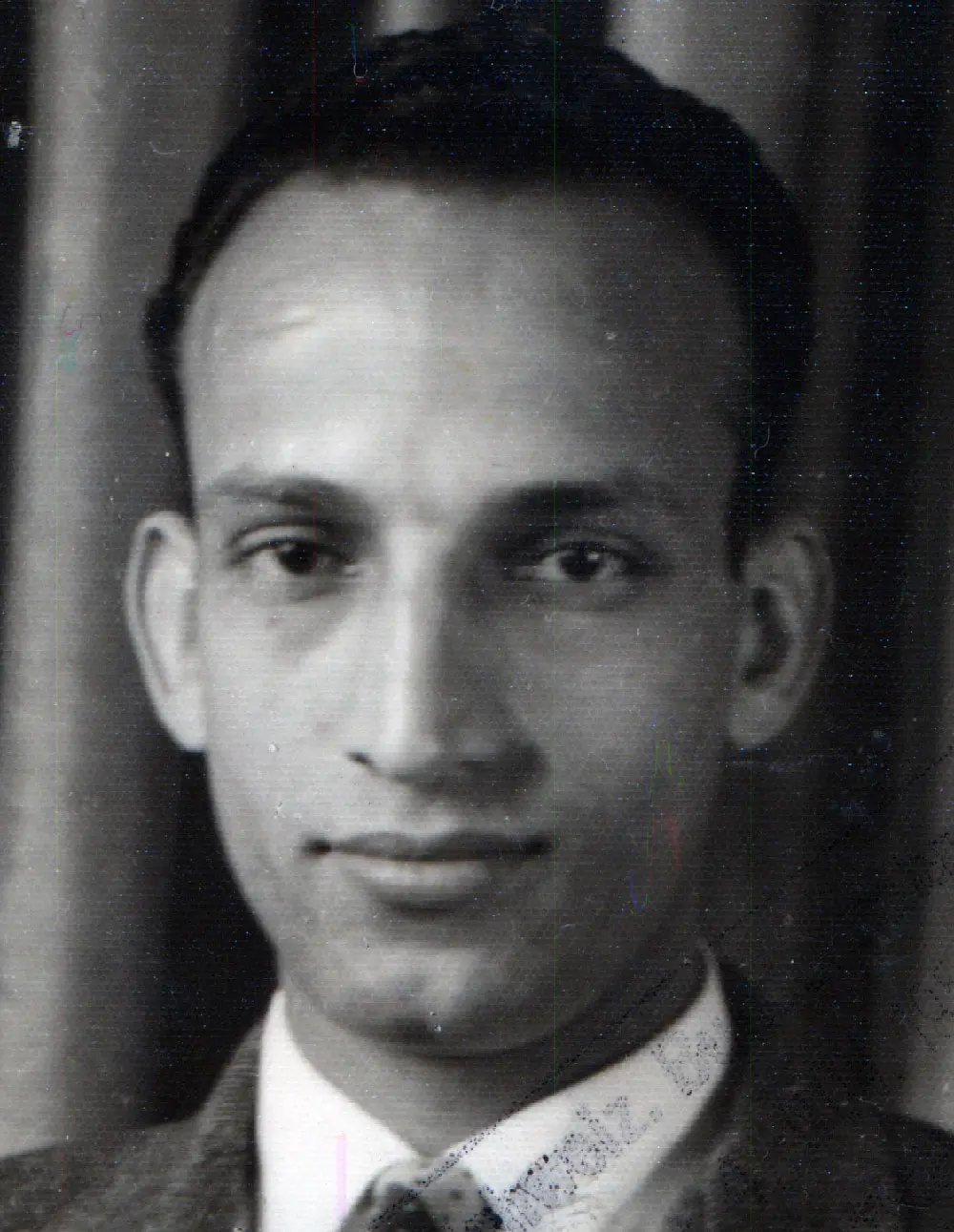
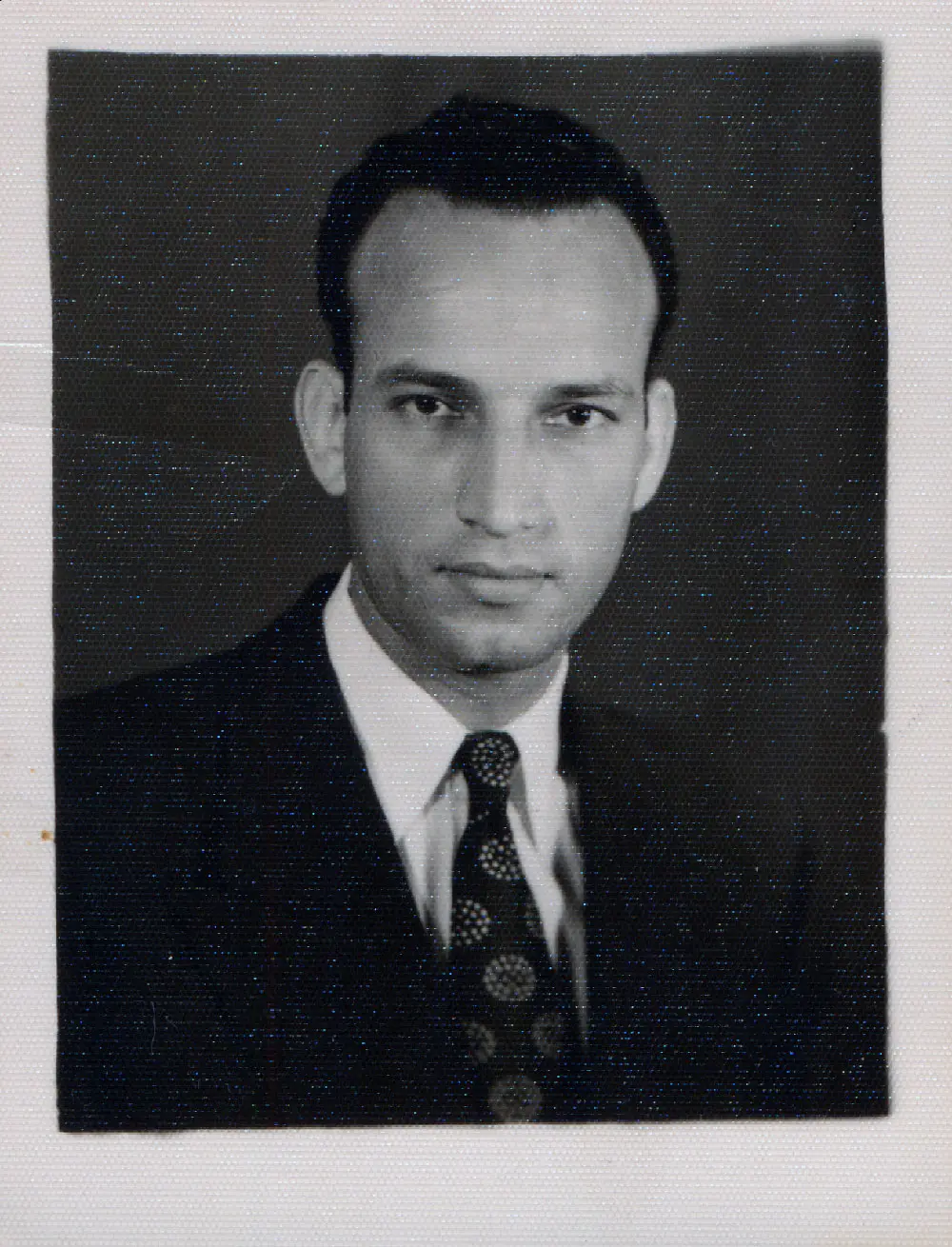
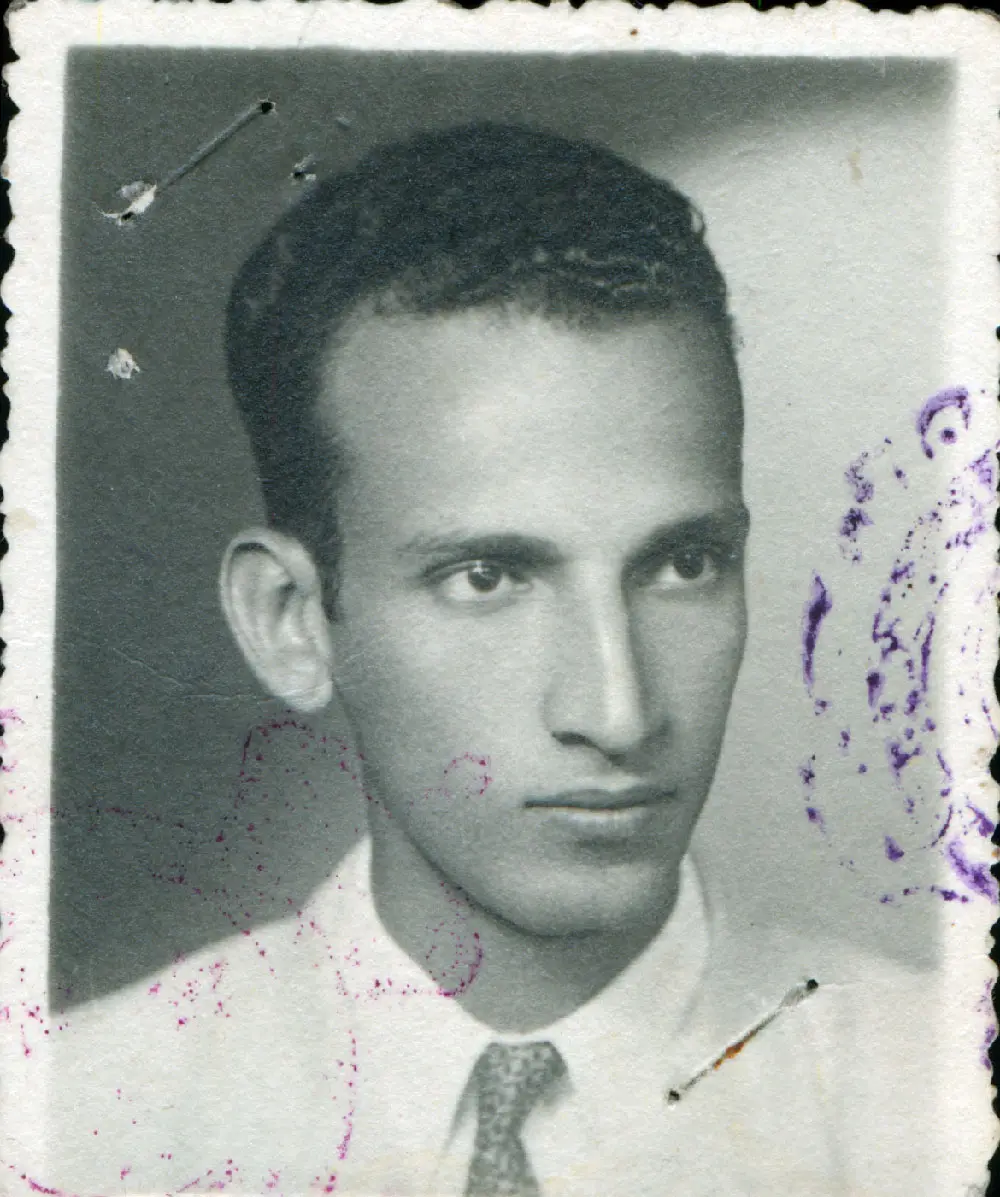
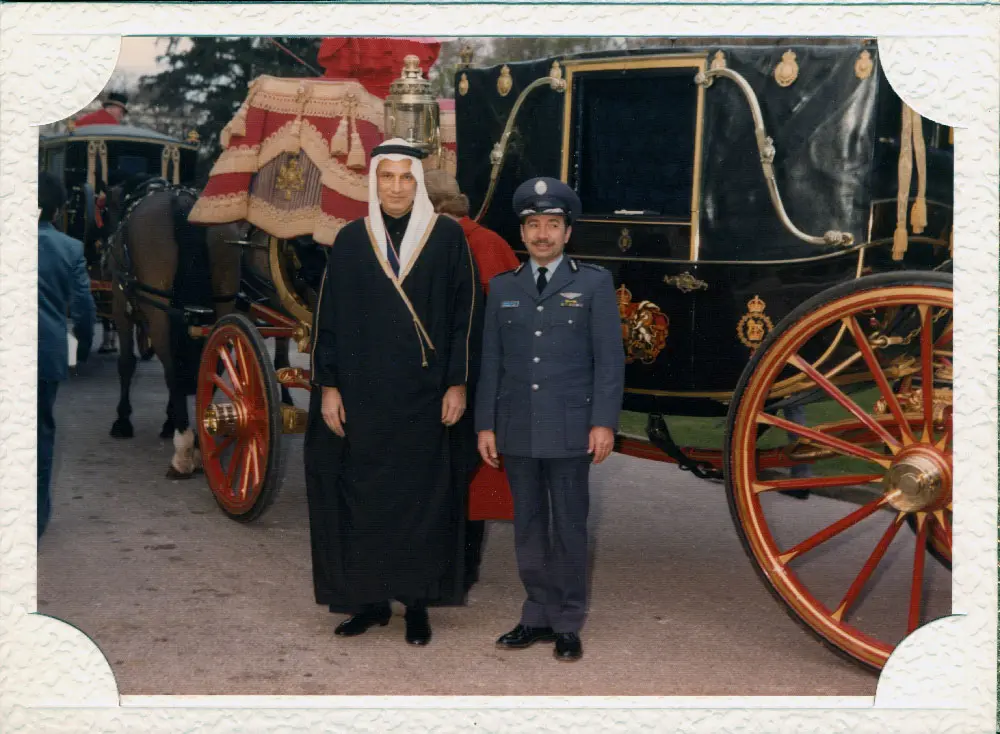
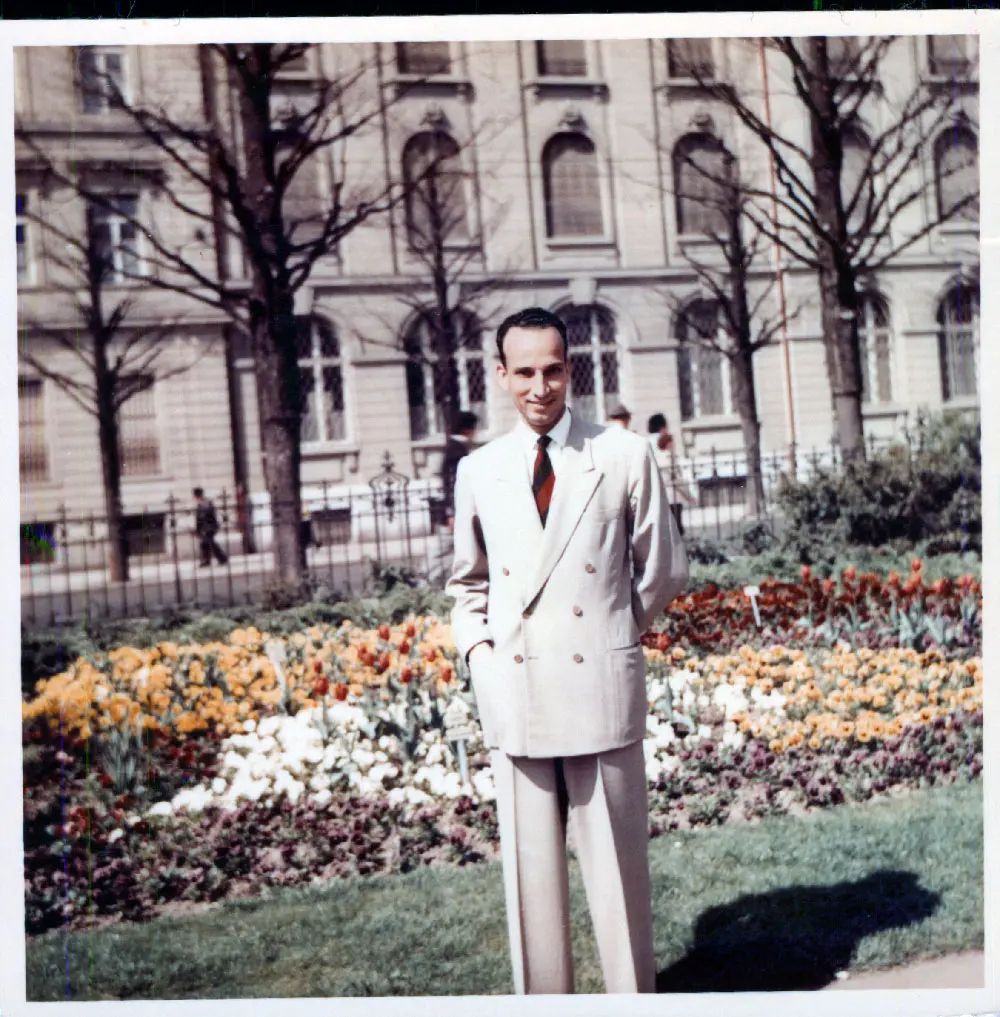
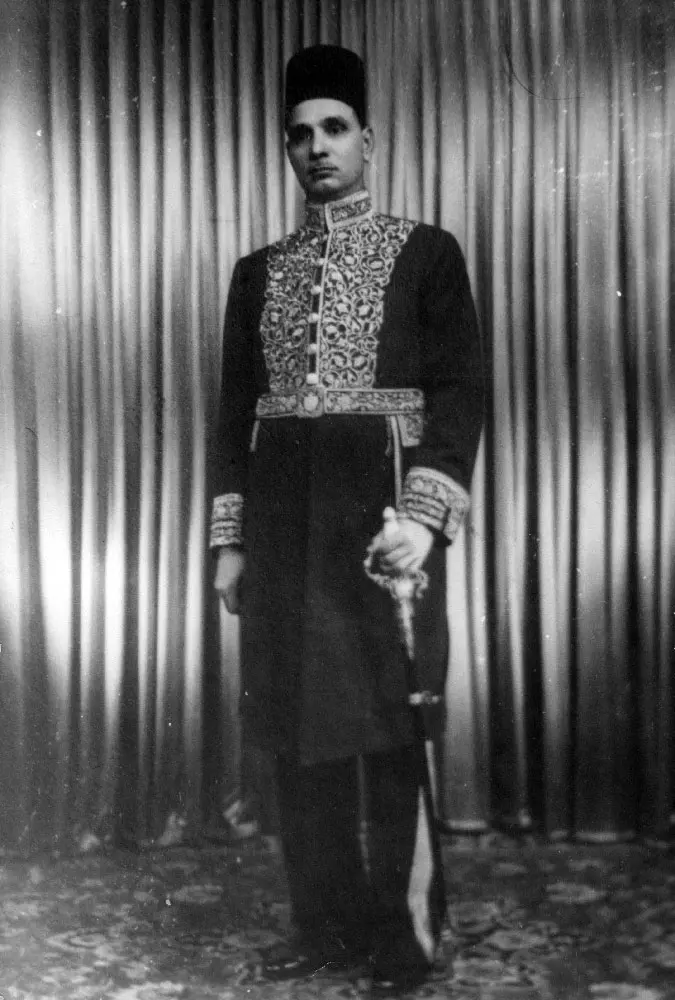
Abdu-Wahhab Azzam (Older Brother)
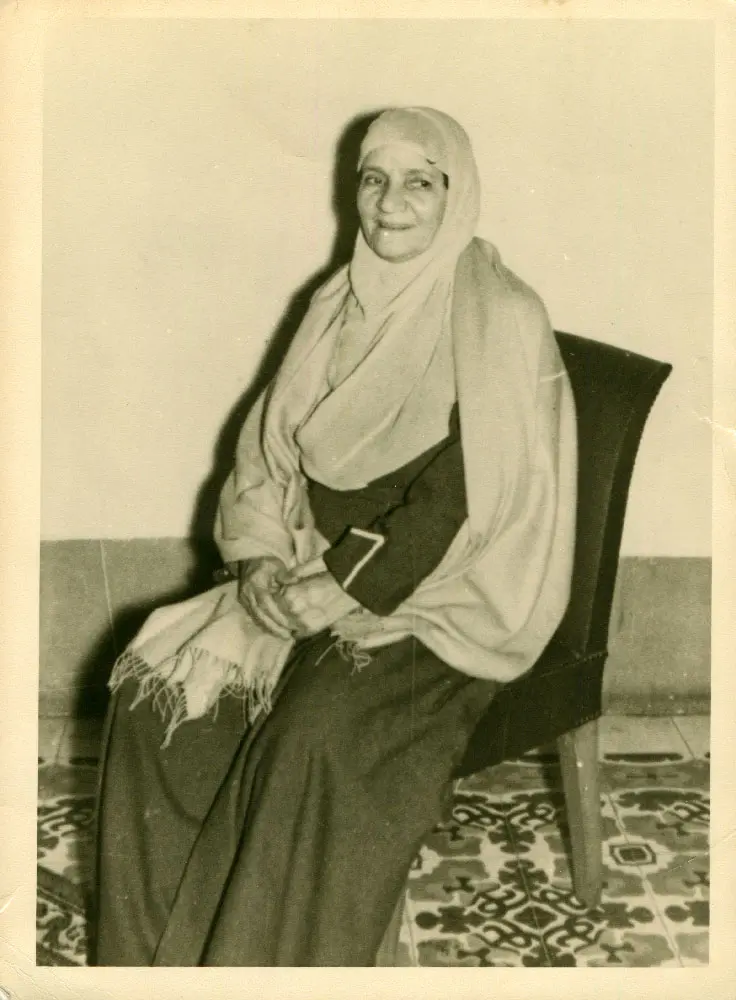
Lady Zubayda, Salem Azam's Mother
Ustadh Salem would subsequently find himself in France studying in the universities Strasbourg and the Sorbonne and here would establish his connections with the nascent Algerian independence movement. A key friendship established was between Salem Azzam and Ahmed Ben Bella, the Algerian freedom fighter and first President of Independent Algeria, which would be a life-long relationship and Ben Bella would later lead the Human Rights Committee of the Islamic Council.
At this time and following the 1952 coup in Egypt which brought to power the authoritarian and anti-Islamic regime of Gamal Abdul’Nasser, Abdul’Rahman Azzam had warm relations with the Saudi Royal family who increasingly positioned themselves as an Islamic bulwark against the Socialist and Nationalist forces of Nasser and later the Ba’athist Movement. It was such a degree that Prince Muhammad al Faisal (son of the late of King Faisal who supported the Islamic Council of Europe) married the daughter of Abdul’Rahman Azzam, Muna Azzam.
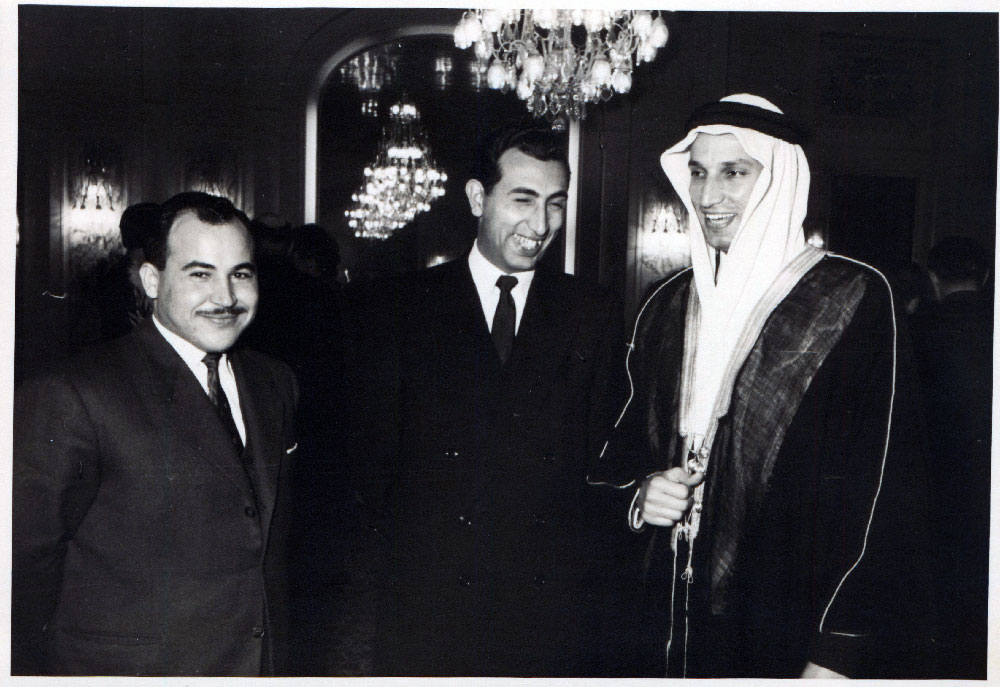
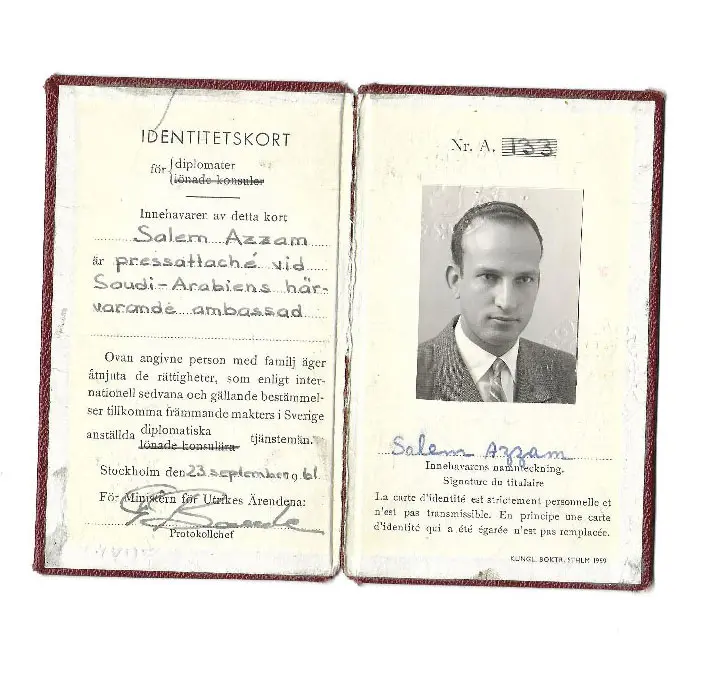
Through Abdul’Rahman Azzam, Salem Azzam joined the Saudi Diplomatic Core and in 1955 he was appointed to the Arbitration Committee relating to the Buraimi dispute. Salem would be posted in Sweden, Switzerland and later the United Kingdom. What is of note is that Ustadh Salem did not merely treat his diplomatic career as a means to further Saudi foreign policy in a limited sense but rather harnessed it to serve the wider Ummah as well as the objectives of the Islamic Movement. Even from the 1960s whilst in Sweden the secular regime of Nasser had put Salem Azzam under full surveillance. But it was in 1964 when Ustadh Salem Azzam was moved to London that his diplomatic credentials were reaching their peak. Though diplomats are expected to rotate country, Salem Azzam’s uniquely hard work meant that by order of King Faisal himself he was to stay at the London embassy of the Saudi Kingdom. Here he used his connections to bring together the different heads of the Islamic Movement across the world and work for their unity. Eventually Ustadh Salem Azzam was promoted to Ambassador at the ranking of 15 stars for the Saudi Kingdom.
Ustadh Salem Azzam saw his role as Saudi Ambassador and Diplomat as one to be used to serve the cause of Islam and therefore his loyalty lay not with a King or a regime but rather with Allah. It was Ustadh Salem Azzam who provided the money for the nascent FOSIS to use to purchase their lodging in 1971 alongside his life-long colleague Ebrahimsa Muhammad. And in 1973 it was Ustadh Salem Azzam who opened Manchester’s first purpose-built Mosque in Victoria Park. It was the year of 1973 which would be the definitive turning point in Ustadh Salem’s life as it saw the inception of the Islamic Council of Europe of which Salem Azzam was Secretary General. Launched initially by the Saudis as a means to promote Islam, dialogue with the West and as a cultural body – Salem Azzam decided to take the organisation in a different direction. Ustadh Salem used the body to bring together the Islamic Movements across the world and as the means by which the greatest minds of the Islamic world could theorise how Islam could be theorised, reived and established as an alternative order. The Islamic Council therefore became a fearless voice imbued with a view that Islam encompassed all facets of life and thus its publications varied from a book of Dua (supplication) to a work on the Future Economic Order of the Muslim World.
Concluding Years
Whilst Ustadh Salem’s immensely impressive skills as a diplomat, political operator and organiser meant that he was able to hold near annual conferences and meetings, two of which were in the prestigious Royal Albert Hall and whilst it meant he was able to bring together a range of thinkers and Islamic leaders from the former Prime Minister of Sudan Sadiq al Mahdi to the Afghan Mujahid leader Burahnnudin Rabbani or the leader of the Muslim Brotherhood the Esteemed Murshid Umar al Tilmisani – his views and positions were too independent. Ustadh Salem Azzam saw the Islamic Council as a voice for the Ummah, a principled body that would advocate Islam in its totality and not be limited by personal interests. Thus, Ustadh Salem condemned Anwar Sadat as a traitor and called for his overthrow after his surrender and capitulation to the Zionist Entity with the Camp David Accords of 1978. Additionally, Ustadh Salem would fervently support the Iranian Revolution of 1979 and term it as a ‘Revolution of Islam in the 20th century’ convening a meeting in Westminster Hall to salute Khomeini’s uprising. And finally, Ustadh Salem was the sole Arab diplomat to condemn the regime of Saddam Hussein and in particular his invasion of Iran at a time when Iraq was being backed by the United States and Britain against the nascent Islamic Republic of Iran.
This was all too much for the cowardly Saudi Regime which had its own personal and financial interests and in 1980 Ustadh Salem Azzam announced his resignation as Saudi Ambassador. He cited that he did not want to embarrass the Saudis whose regime were reluctant to support his gallant Islamic activities publicly and he also cited that it was due to his commitment to the Islamic Dawah that he was to resign. This perfectly encapsulates where Ustadh Salem’s allegiance lay, not with a party or a government but with his allegiance to the Dawah and the Islamic Movement. The story, however, did not end here and Ustadh Salem would continue to lead the Islamic Council.
For more on the conferences and the work of the Islamic Council go to the ICE section.
