
About the Islamic Council of Europe
The story of the Islamic Council is one of an attempt to bring together some of the greatest thinkers, statesmen and leaders that the Islamic Ummah could offer, in the joint effort of actualising what was perhaps sometimes the theoretical sloganeering of calling to an Islamic order. Whether in Paris or Pakistan, London or Khartoum, scholars and jurists flocked to provide deep insight and sincere dedication to provide an Islamic alternative to a world that was troubled by war, dictatorship and corruption. Yet in the midst of this, these great Islamic figures were living in a period of hope as they experienced the new Islamic Awakening. But although the legacy of the Islamic Council is certainly one of cooperation, so too is it of difficulty and obstacles. For it was an organisation based not on personal allegiances or partisanship but principle. For example, whilst Ustadh Salem Azzam stood against Iraq in the Iran-Iraq War, he opposed the Gulf War against Iraq and subsequent US military presence in the region. Principle can bring few friends and many foes, and the Islamic Council swiftly lost support from particular nations.
But whilst it may have lost former friends it gained independence to be one of the boldest and bravest voices of the Islamic movement in its time, standing unequivocally for the truth and unapologetically against tyrannical regimes in advocating for an Islamic system. This is truly a story that should enthuse and inspire, the work left behind by the Islamic Council, the numerous publications, lofty conferences and the successes and tribulations it experienced acts as a blueprint for future Islamic activism and Dawah. For the researcher it provides an insight to a hitherto almost forgotten episode of the development and work of the Islamic movement. And to the Da’ee it presents the mantle to be upheld and the flag to be unfurled anew, to accomplish what these men strove to achieve throughout their lives - an Islamic State.
Sections
Overview
Establishment
International Conference: Islam & Challenge of our Age (1976)
International Economic Conference (1977)
International Seminar on Muslim Minorities (1978)
International Conference: Defence and the Muslim World (1979)
International Conference: Liberation of Muslim Lands (1979)
International Conference: Jerusalem (1979)
International Seminar on Muslim Minorities: London (1980)
Exhibitions (1980)
International Conference: Prophet Muhammad (PBUH) & his Message (1980)
Declaration of Human Rights (1981)
The Islamic Council & the Muslim World (1982)
International Conference: Islam Today (1983)
Calling to & Establishment of the Islamic Order (1987)
The Islamic Unity Conference (1988)
Islam in Africa Conference (1989)
Peace in the Gulf Conference (1990)
1990's
Publications
Audio
Video
Establishment
The Islamic Council of Europe was founded in May 1973 by the Conference of Islamic Cultural Centres and Organizations of Europe, in London as a coordinating body for the promotion of Islamic activities in Europe. Though based in London it had constituents across Europe. The Council sponsored a number of religious, education and cultural activities in its time including conferences, the construction of mosques and the publications of seminal texts. Initially the Council was primarily a cultural body which was supported by His Majesty King Faisal Bin Abdul Aziz. However, after the King’s martyrdom and under the oversight of the Council’s Secretary General Salem Azzam, the Islamic Council of Europe took on a markedly more political turn.em Azzam and the Islamic Council.
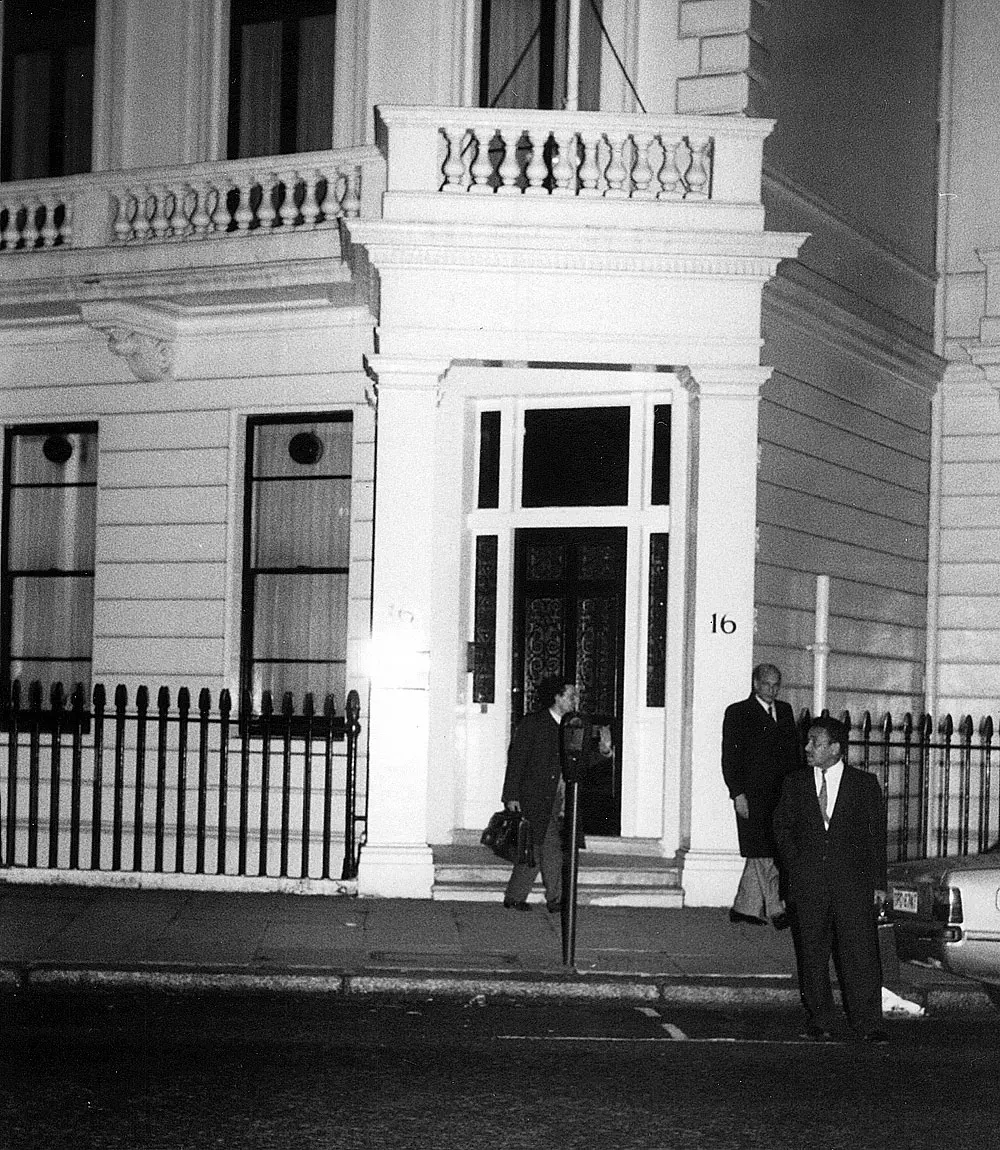
Office of the Islamic Council, London - United Kingdom
International Conference: Islam & Challenge of our Age
One of the first conferences held by the Islamic Council of Europe was between the 3rd and 13th of April 1976 in London entitled the ‘International Conference on Islam and the Challenge of Our Age’ on the occasion of the World of Islam Festival. The inaugural session was held in the Royal Albert Hall with the remaining ten sessions in the Royal Commonwealth Society. The conference was inaugurated by Prince Muhammad al Faisal. Others who spoke at the inaugural session included Sheikh al Azhar Abdul Haleem Mahmud, Dr Ahmadou Karim Gaye, foreign minister of Senegal and Secretary General of the Organisation of Islamic Cooperation, Dr Muhammad Natsir, former Prime-Minister of Indonesia and Chairman of Dewan Dawah Islamia, Mr Sadiq Al-Mahdi, former Prime Minister of Sudan, Mian Tufail Mohammad, the Amir of Jammat-e-Islami Pakistan, Professor Muhammad Qutb, Professor Muhammad Asad, and others.
It was perhaps the first time that so many luminaries of the Muslim world gathered in one place in the modern age to explain the different aspects of the religion and culture of Islam. Together they presented 33 papers on different topics at the conference.
Learn More
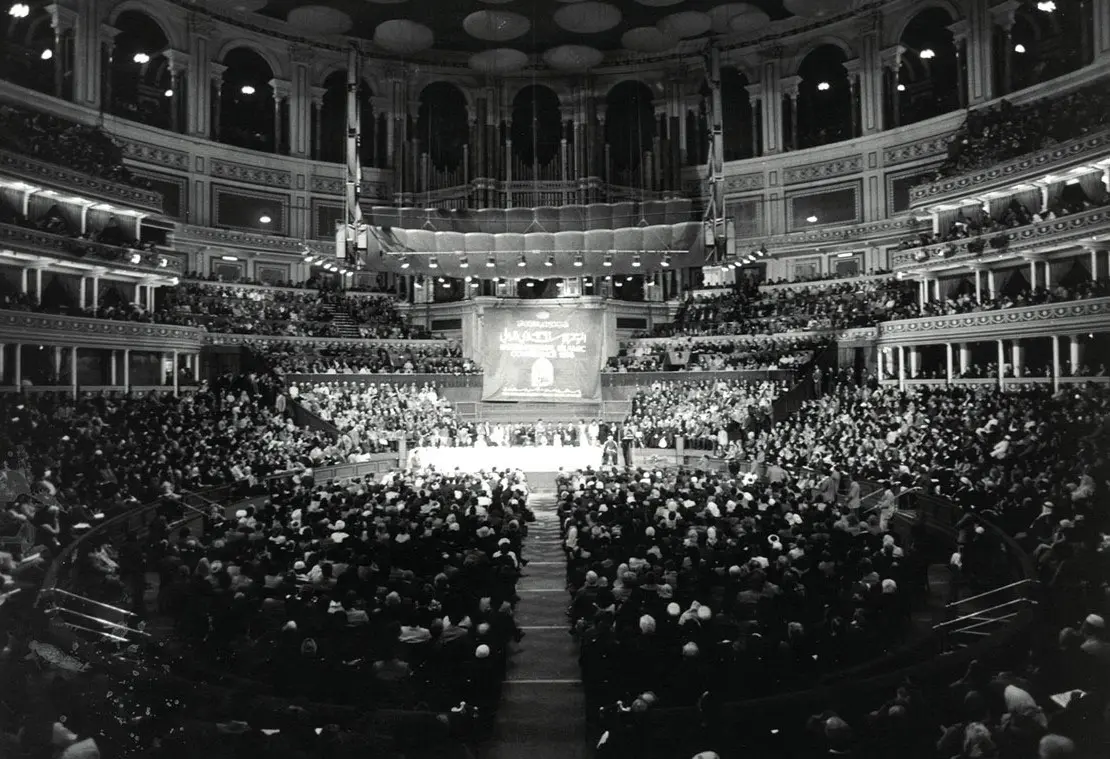
International Islamic Conference 1976, Royal Albert Hall
International Economic Conference
Following this conference was the International Economic Conference held between the 4th and 9th of July, 1977 in London with the theme: ‘The Muslim World and the Future Economic Order’. This was chosen as the Council believed the prevailing economic orders were devoid of any moral basis and had proved themselves sterile. The conference was inaugurated by Dr Karim Gaye, Secretary General of the Organisation of the Islamic Conference and was spread over 12 sessions. The participants comprised a highly select group of Muslim scholars, statesmen, ministers of finance, commerce, planning, education, petroleum and mineral resources, agriculture and governors of central banks and high officials of several organs of the United Nations. The conference reviewed present economic policies and called on Muslim governments to adopt the Islamic economic order based on equality, justice and a balanced relationship.
Learn More
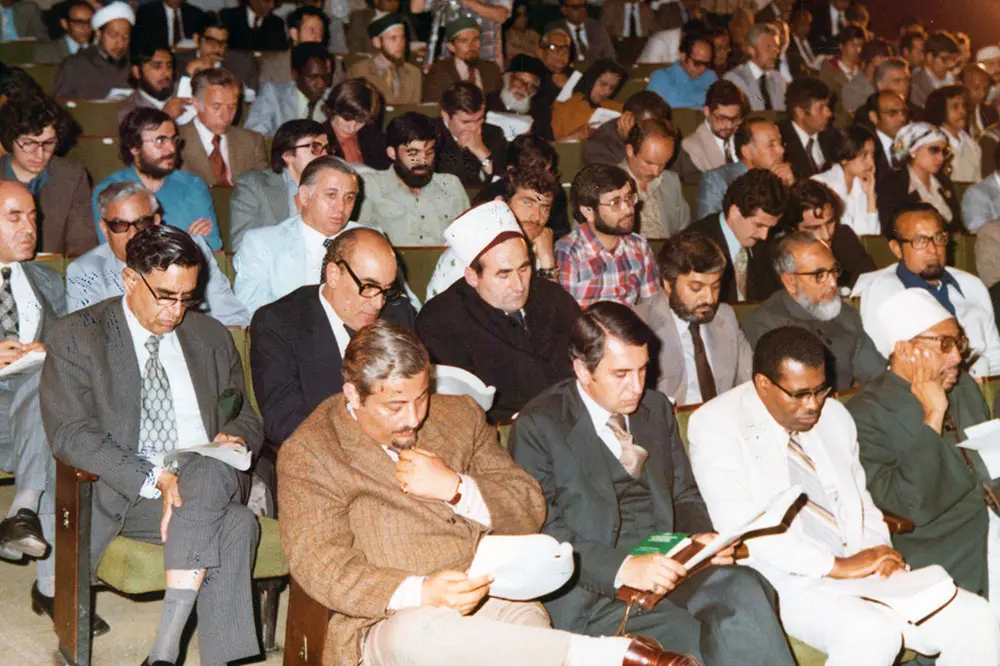
International Economic Conference
International Seminar on Muslim Minorities
The ‘International Seminar on Muslim Minorities’ was also hosted by the Islamic Council and was held between the 22nd and 28th of July 1978. It was instigated by the growing persecution and denial of human rights of Muslim minorities in many parts of the world. It was attended by 61 delegates from 25 countries who participated in over 16 working sessions. Papers presented at the Seminar covered the review of basic data about Muslim minorities as well as their political, educational, legal, social and economic problems. Of note were the Muslim minorities in Europe, the Soviet Union, Burma, East Asia, India, Rhodesia, Malawi, Botswana, India, Yugoslavia, North America and Australia. The seminar also underlined the role of Muslim nations in aiding Muslim minorities in their struggle for fundamental human rights.
Learn More
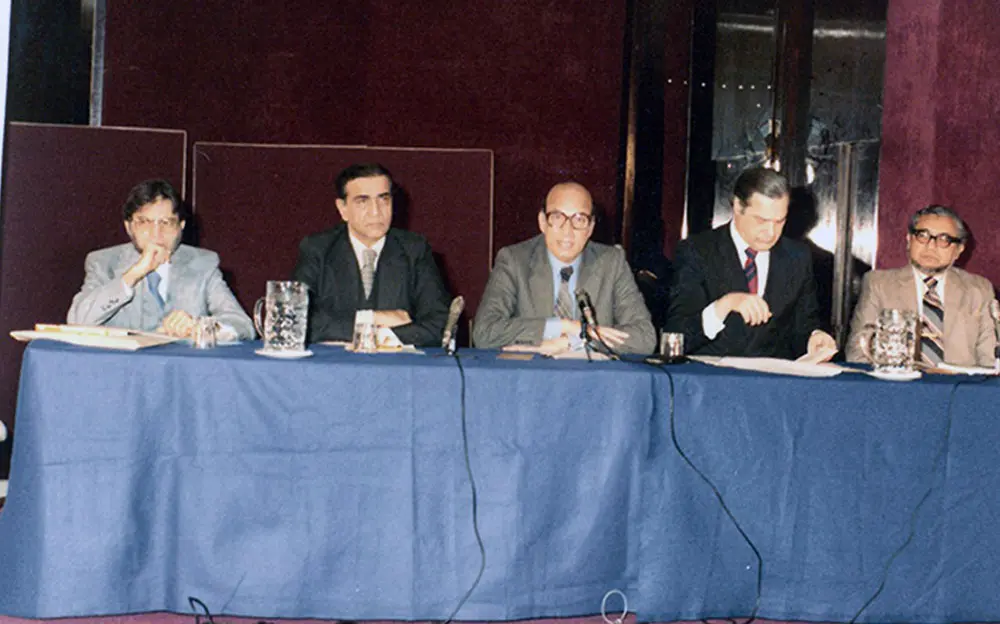
International Seminar on Muslim Minorities
International Conference: Defense and the Muslim World
Following this was the ‘International Conference on the Défense and the Muslim World’ held between the 5th and 9th of February 1979 in London. The aim was to create a better understanding of Islamic military concepts and to discuss the ways and means whereby Muslim countries, individually and collectively, could develop effective self-defence capabilities and to ensure peaceful and stable conditions necessary for the socio-economic progress. The inaugural address was presented by President of the Islamic Republic of Pakistan, Shaheed Zia-ul-Haq. The conference also received messages of support from the Presidents of Tunisia, Libya, Indonesia, Bangladesh and the King of Morocco. The participants from 20 countries included defence ministers, chiefs of staff, high military officers, statesmen and experts on military technology.
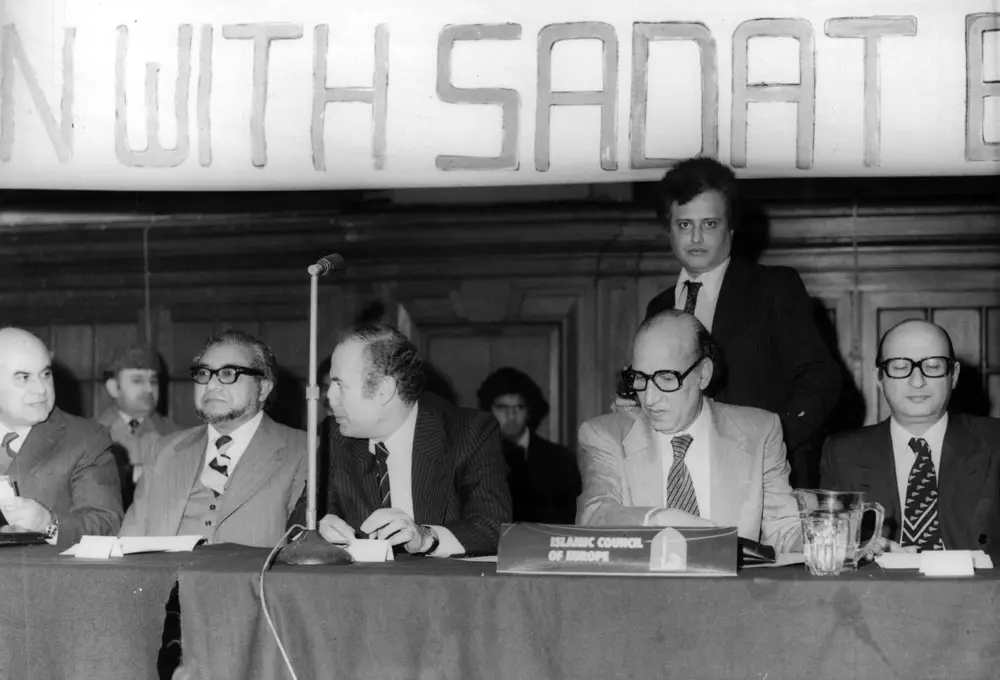
International Seminar on Muslim Meeting welcoming the Iranian Revolution, 1979
Alongside the conference was an exhibition on the latest defence technology from some of the leading manufacturers in the industry.
In the wake of the glorious Islamic Revolution of Iran a meeting was convened on April 7th 1979 in London to welcome the revolution as well as to criticise and review the so-called Camp David Accords. The meeting received messages of solidarity from the leaders of the Islamic Movement in Egypt, Turkey, Indonesia, Pakistan and India and was largely attended by the Muslim community in England, and was addressed by ambassadors, cabinet ministers, scholars and statesmen from Muslim Countries. The meeting passed a resolution viewing with grave concern Sadat’s capitulation and re-affirming resolve to liberate al-Quds and all Muslim lands under illegal foreign occupation and called upon Muslim governments to extend their fullest support to such liberation movements
Learn More
International Conference: Liberation of Muslim Lands
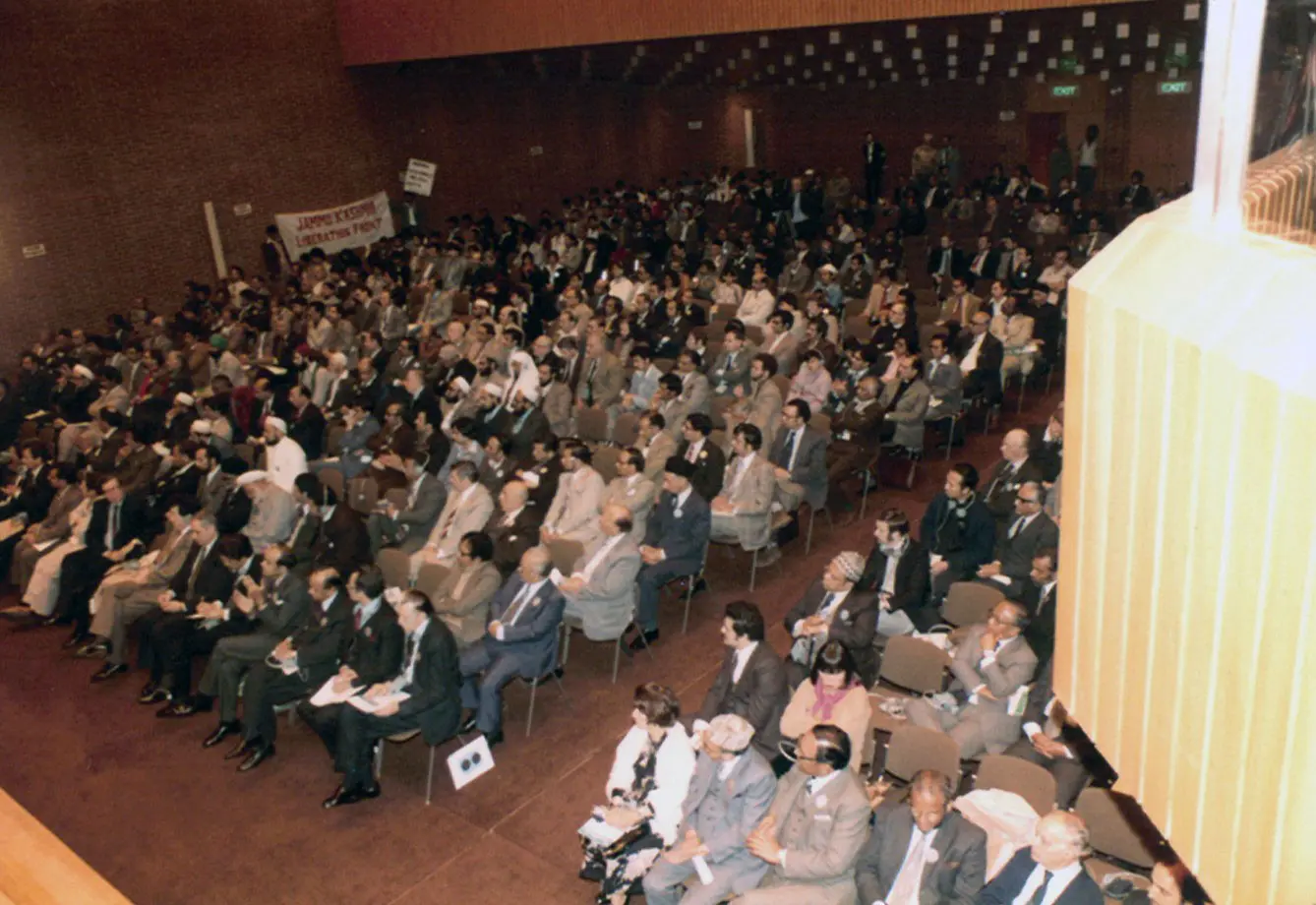
Between the 24-27th May 1979 the International Islamic Conference for the Liberation of Muslim Lands was subsequently convened. This conference focussed on appreciating the contemporary Islamic awakening and how to consolidate it, outline its implications and its impact on the international relations of Muslims. Speeches by scholars, statesmen and representatives of the global Islamic movement were paired with deliberations on the issues of the Muslim world. The conference passed a variety of resolutions in relation to liberating Muslim lands, the persecution of Muslims and denouncing the biased and hostile reporting about Islam and Muslims by Western Media
International Conference: Jerusalem
At the end of the tumultuous year of 1979, between the 3rd and 5th of December the Islamic Council organised the International Conference on Jerusalem. The aim of the conference was to identify, analyse and elucidate the realities of the Palestinian issue in correct historical, academic and multi-religious perspectives and with the aim of dispelling the distortions created by Zionist propaganda, thus contributing to world peace.
The Participants at the conference included distinguished Muslim, Christian and Jewish scholars and jurists from all across the world including eminent lawyers, statesmen and representatives of several Muslim governments, the Arab League, the Organisation of Islamic Cooperation, the P.L.O and the global Islamic Movement who examined objectively and in-depth the various facets of the Palestinian issue.
International Seminar on Muslim Minorities: London
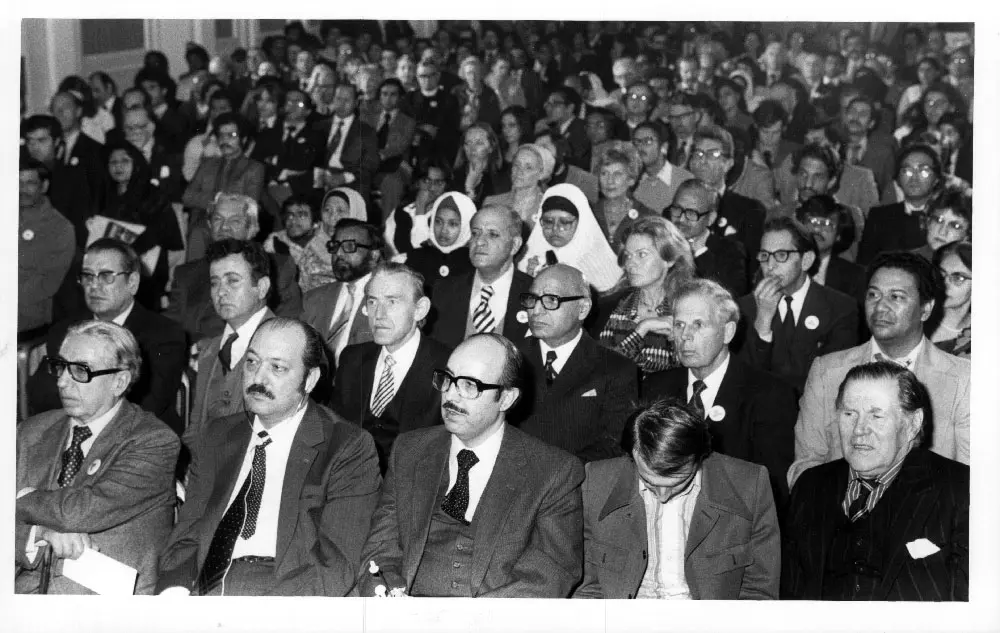
Succeeding the conference on Muslim minorities in 1978 on April 9th and 10th, 1980 the Islamic Council of Europe, sponsored by the O.I.C, convened the International Conference on Muslim Minorities in London. The meeting was inaugurated by H.E. Mr Habib Chatti, Secretary General of the O.I.C, and was spread over 5 working sessions where the problems of the Muslim minorities in Western and Eastern Europe, the USSR, Sri Lanka, East Africa, Japan, the Philippines and North America were discussed by experts. The concluding session saw the establishment of the International Commission on Muslim Minorities as a new organ of the Council thus actualising a resolution of the 1978 International Seminar.
International Conference: Prophet Muhammad (PBUH) & his Message
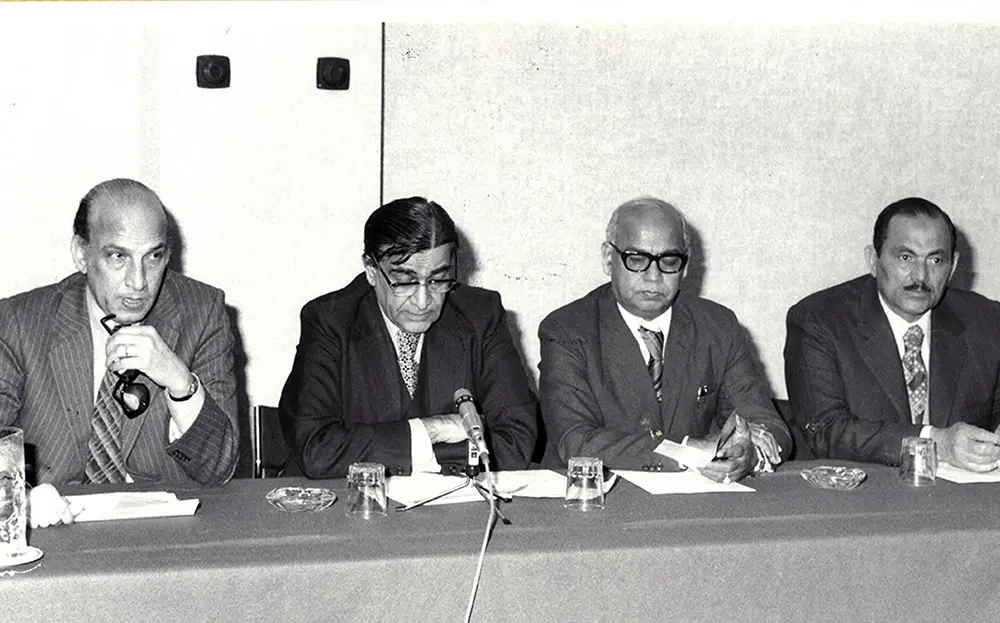
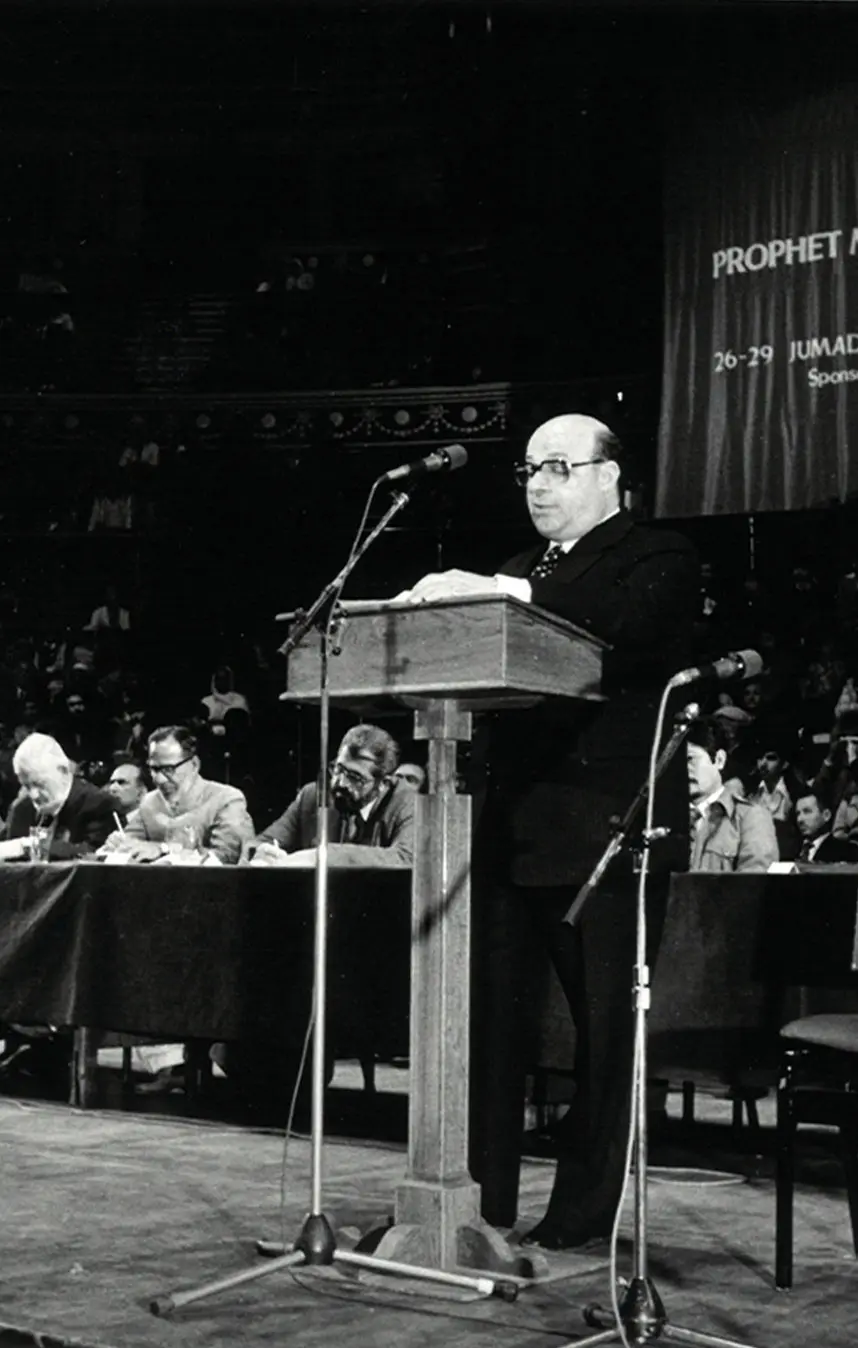
The Universal Islamic Declaration which was prepared by the Islamic Council of Europe in consultation with many leading Islamic scholars, thinkers and leaders from the Global Islamic Movement was presented at the Inaugural Session of the International conference on ‘Prophet Muhammad (PBUH) and his Message’ held between the 12th and 15th of April 1980 in London. The Council did not waver its attempt to present the correct image of Islam to the Western world and foster greater tolerance and understanding but at the same time the Universal Islamic Declaration also sought to call Muslims towards establishing an Islamic Order away from alien ideologies which have long dominated them.
During the conference various aspects of the life of the Prophet Muhammad (PBUH) were discussed and scholarly papers presented on the significance of Hijrah, Tawhid, Jihad, Islam’s impact on history, the spirit of the Islamic revolution and the political, social and economic systems of Islam. As well as this the main problems facing the Muslim Ummah were raised. The conference attracted attention and favourable coverage including a 5 column report from the UK newspaper, The Times which said:
‘The promulgation of a Universal Islamic Declaration by the Islamic Conference, now taking place in London, fills a gap that has long been felt in the West both by Muslims and Non-Muslims…. The possibility of such a declaration arises only from the existence of a body like the Islamic Council of Europe, with its general acceptability in the Muslim world as both authoritative and representative.’
Exhibitions
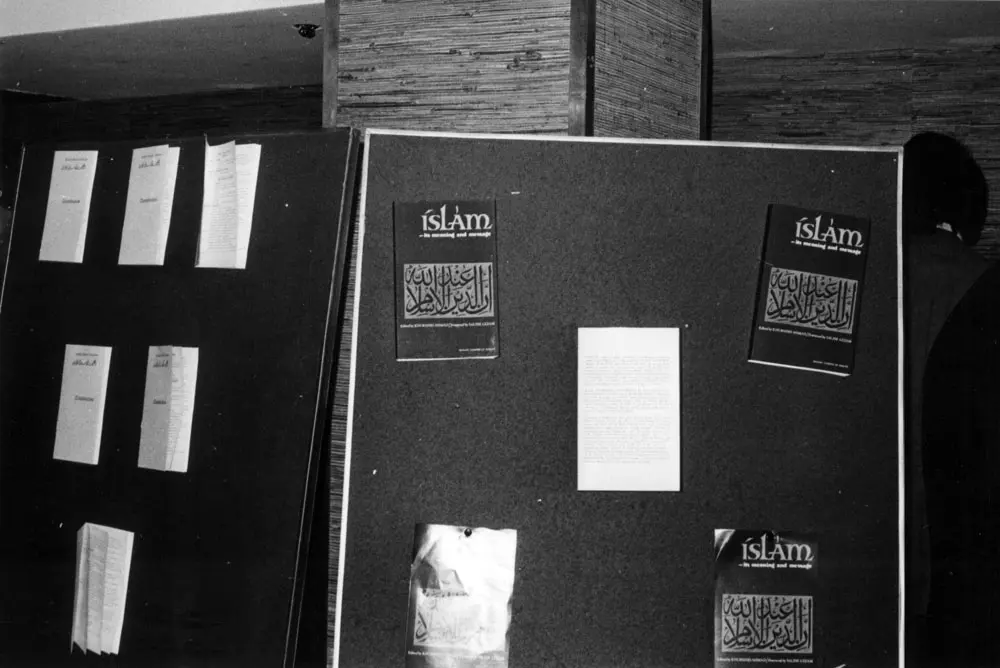
The Islamic Council also hosted various exhibitions, the first being in London from the 23rd and 25th of September 1980. Entries to the exhibition included about 2,000 titles by 200 participants from across the globe. Concurrently with the exhibition, the Council also organised a 3 day seminar on the ‘Western Library Services and Resources Relating to the Muslim World’. Due to the great interest and warm reception, the Council decided to make it an annual affair. Another notable exhibition was hosted at the UNESCO in Paris between the 3rd and 5th of June 1981 where 1500 books in the French language by 187 publishers were displayed. The exhibition was inaugurated by H.E. Mr Amadou Mahtar M’Bow, Director General of UNESCO, and was attended by 5000 visitors, including diplomats, media representatives, writers, scholars and leading publishers of books on Islam. The exhibition drew media coverage and the prestigious paper ‘Le Monde’ devoted considerable space reviewing the exhibition.
Exhibitions
Declaration of Human Rights
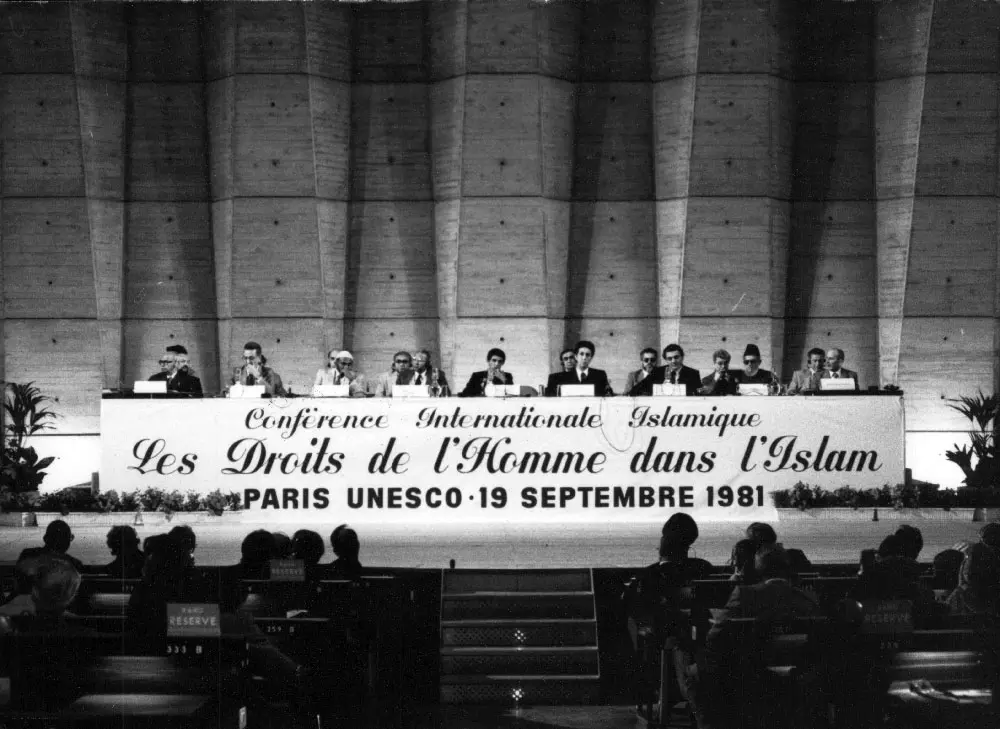
On September 19th 1981 the Islamic Council of Europe convened at the UNESCO in Paris. The keynote speech was given by the Secretary General, Ustadh Salem Azzam. The inaugural session was addressed by Mr Amadou Mahtar M’Bow, Director General of UNESCO. At the conference leading scholars, jurists and representatives, delivered speeches and spoke on human rights in Islam. The highlight of the conference was the proclamation of a Universal Islamic Declaration of Human Rights fundamentally based on the Quran and Sunnah. The conference received congratulatory messages from the President and Prime Minister of France. President Francois Mitterrand welcomed the proclamation in particular. The conference additionally led to the establishment of the International Islamic Commission on Human Rights in December 1981. Its Chairman was Mr Ahmed Ben Bella, the first President of Algeria and an important organ of the Islamic Council.
The Islamic Council & the Muslim World
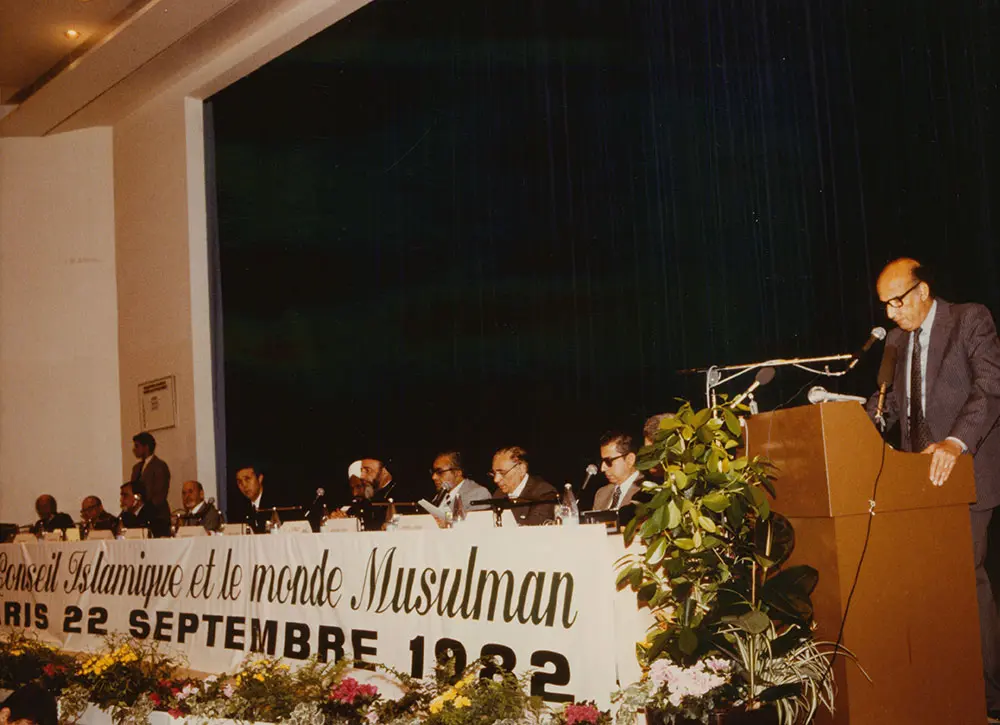
The next major conference was the International Islamic Conference on ‘The Islamic Council and the Muslim World’ held in Paris on September 22nd 1982. The conference had the aim of focussing on the major problems confronting the Muslim world, analyse their cause(s) and to articulate how the Islamic Council could potentially remedy these ailments. The conference dwelt at length on the issue of Palestine as well as the role of the United States and the Soviet Union, the Israeli invasion of Lebanon, the massacres of Sabra and Shatila, the Camp David Accords, the Soviet Invasion of Afghanistan, the Iran-Iraq War, the overproduction of oil by some Muslim countries, the positions of Muslim governments in relation to the Islamic code of Human Rights and the hostile attitude of Western Media towards Islam. As a result the Council produced the document: ‘The Islamic Council: What it stands for?’ which underlines the importance of the unity of the Ummah and the need to reject man-made secular ideologies and implement Islam.
International Conference: Islam Today
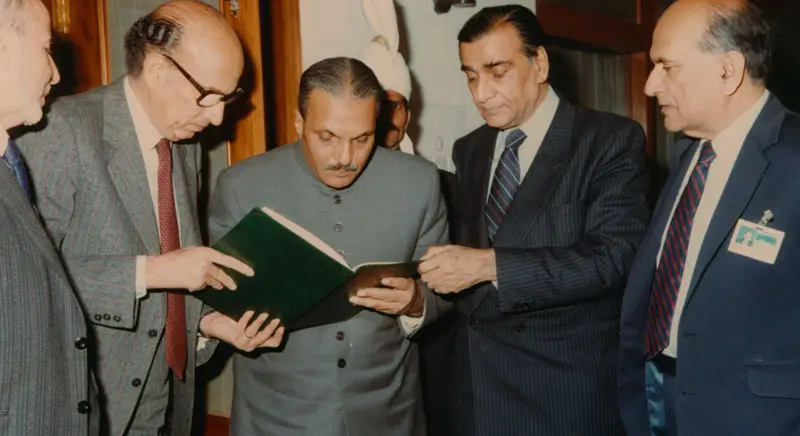
Another seminal event hosted by the Islamic Council was the International Islamic Conference on ‘Islam Today’ which was held between the 10th and 12th of December 1983. It was inaugurated by the President of the Islamic Republic of Pakistan, the President Shaheed Zia-ul-Haq. The conference saw the attendance of 95 delegates from different parts of the world, including the leadership of the Afghan Mujahideen. Islamabad itself was chosen as the site for the conference in order to affirm solidarity with the Muslim world and the historic struggle and Jihad of the Afghan people to liberate their land from occupation.
The Council during this occasion released a seminal and historic document entitled ‘A Model of an Islamic Constitution’, spelling out the framework of an Islamic State in modern times. The document represents the consensus of a large number of scholars, jurists, statesmen and representatives of the Global Islamic Movement. The conference also reaffirmed the need to re-build the socio-political order of Muslim nations on the foundations of the Quran and Sunnah and for a more judicious utilisation of the economic resources of the Muslim world for the best interests of the Ummah.
In the final Communique, the conference passed eleven resolutions, the most prominent of which were on the Soviet occupation of Afghanistan, the recognition of the nascent Turkish Republic of Northern Cyprus, condemning America’s support for Israel and the conspiracy to balkanize Lebanon. A call was also made to support the right of self-determination of the peoples in Ogaden, Eritrea, Pattani, Moro and other Muslim lands where liberation movements are active, it also called upon the international community and in particular Muslims to support these causes. The conference also highlighted the denial of civil and human rights to Muslim communities in a number of areas including Kashmir and majority non-Muslim nations such as Thailand, Western Thrace, Burma, Ethiopia, Yugoslavia, Bulgaria and the Soviet Union.
Calling to & Establishment of the Islamic Order
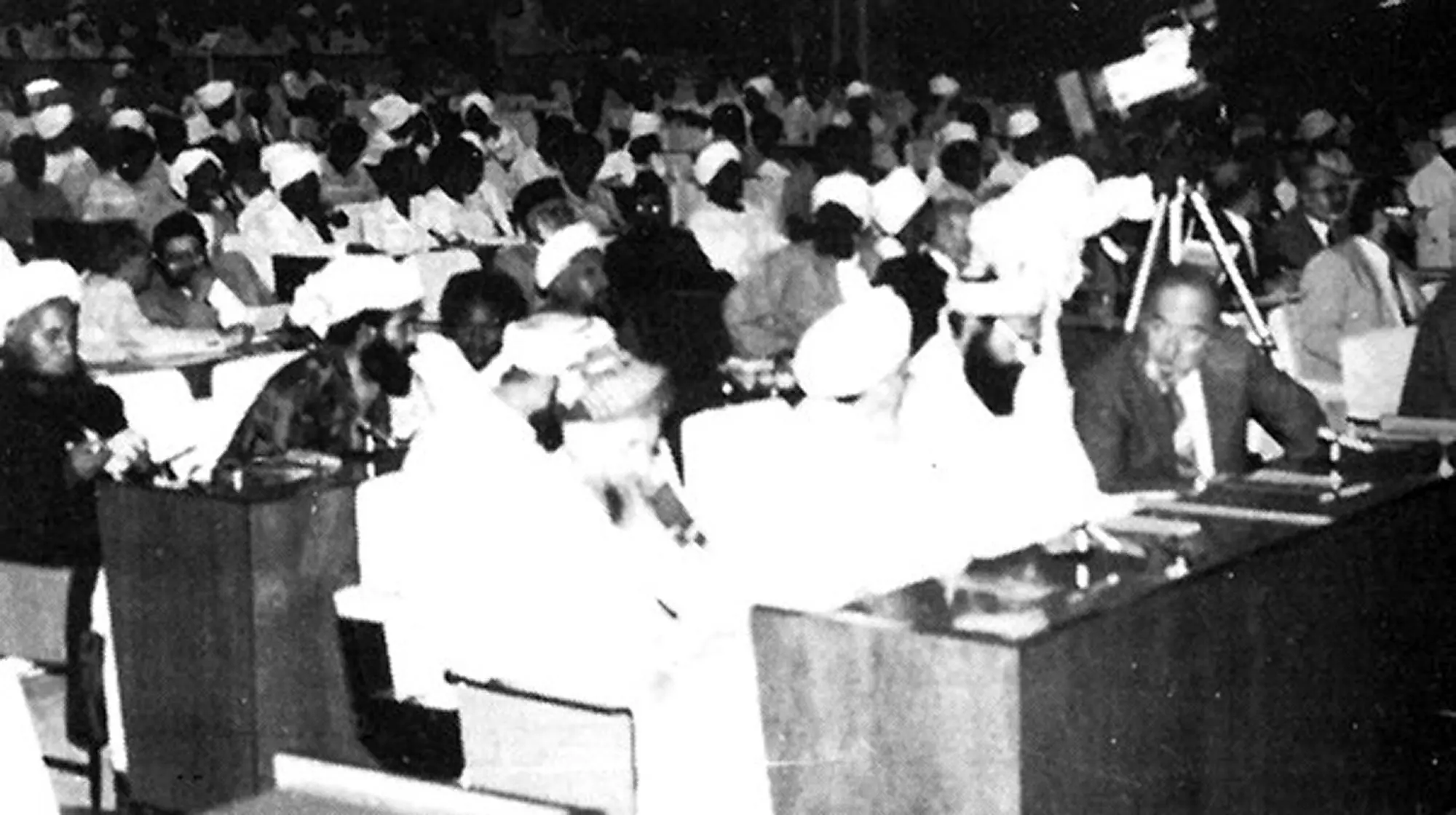
February 1987 saw the hosting of the Conference for the Calling to and Establishment of the Islamic Order. In the conference, the issue of the Islamic Awakening was once more raised as well as the bond between Sudan and Egypt. The Conference was also commenced in the name of the Islamic Forces of Egypt. This conference was also a podium by which to attack the tyranny which was present in Egypt preventing a true expression of popular will. Conversely it countered this with the example of how the implementation of Islamic Law was met with the confidence of the Sudanese people and how Egypt should take strides to respect the will of people and adopt an Islamic system. A subsequent pamphlet was released sharing the title of this conference.
The Islamic Unity Conference
The Islamic Unity Conference held between the 16th and 17th of February 1988 was one of the last major conferences hosted by the Islamic Council. It was held in Islamabad, Pakistan and faced opposition from then Prime Minister Muhammad Khan Jenjo and some Arab regimes, but it instead received the blessing of Zia Ul Haq and thus went ahead as planned. The conference saw the participation of a variety of distinguished guests composed of great Islamic thinkers and leaders including President Zia ul Haq, Necemetting Erbakan, Sawar al Dhahab, Hassan al Turabi, Sadiq Abdul’Maajid, amongst others. During Ustadh Salem Azzam’s welcome address to the conference he saluted the Islamisation policies of Zia Ul Haq and hoped that such policies be emulated by regimes across the Muslim world. He also emphasised that there can be no real Islamic unity until there is an Islamic order whilst also mentioning the Iran-Iraq war and the destruction caused by it. Ustadh Azzam highlighted a number of Muslim causes ranging from Afghanistan, Palestine, Kashmir, Thailand, to Bulgaria and did not fail to also make note of the dangers of underdevelopment and poverty to the Muslim world. The Conference led to the publication of the 5th pamphlet of the Islamic Council entitled ‘Unity of the Ummah’ succeeding the previous 4; the Islamic Declaration (London, 1980), the Universal Islamic Declaration of Human Rights (Paris, 1981), A Model Islamic Constitution (Islamabad, 1983) and the Dawah and Methodology for the Establishment of the Islamic Order (Khartoum, 1987).
Islam in Africa Conference (1989)
Between the 24 and 28th of November 1989 the Organisation of Islamic Co-operation convened a conference entitled ‘Islam in Africa’ in Abuja, Nigeria. In attendance was the Chief of Nigeria’s Army Staff representing President of Nigeria, General Ibrahim Badamasi Babangida, Dr Hamid El Ghabid Secretary General of the OIC, Ibrahim Dasuki the 18th Sultan of Sokoto, as well as other Ulama.
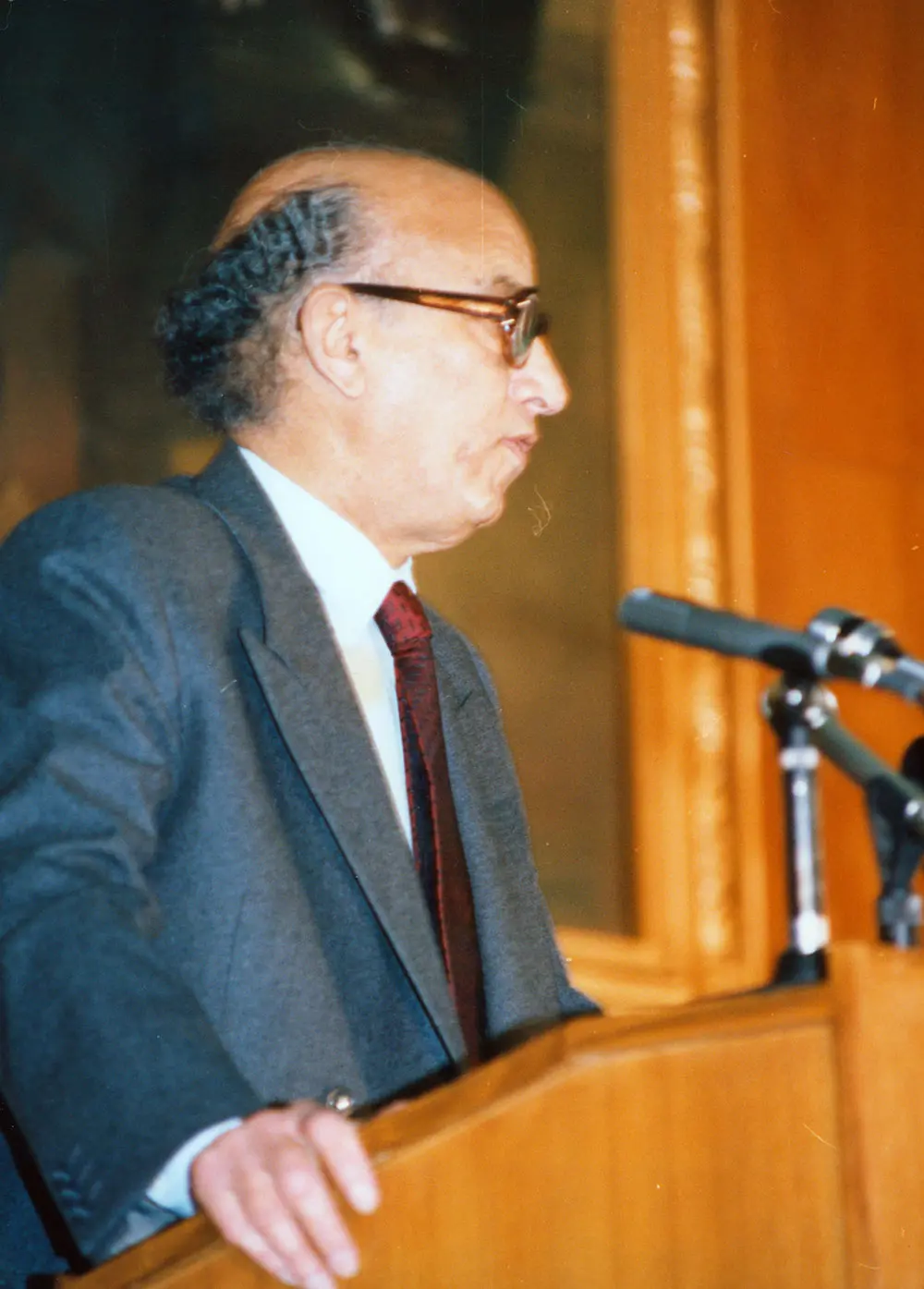
In this conference Ustadh Salem Azzam represented the Islamic Council as its Secretary General. The result of the conference was the Abuja Declaration and the eventual establishment of the ‘Islam in Africa Organisation’ which sought to promote the unity of Muslims in Africa.
In his speech Ustadh Salem Azzam spoke of the historic role of Islam in Africa from the migration of the Companions of the Prophet Muhammad (PBUH) to Abyssinia to the potential it holds for Africa’s future. He further spoke how Islam promotes unity, the brotherhood of man regardless of race or colour, respect for human rights as well as peace. But Ustadh Salem made note that the key to this peace was justice whilst towards the end of his speech making note of the modern forms of bondage which have kept Africa captive.
Learn More
Peace in the Gulf Conference (1990)
Following Saddam Hussein’s Invasion of Kuwait, Iraq was firmly in the crosshairs of the United Statess military. Whilst Ustadh Salem Azzam had stood against the dictatorial regime of Saddam Hussein in the Iran-Iraq War and in regard to the Halabja Massacre in 1988, he had firmly believed in Islamic Unity. Therefore, Ustadh Salem Azzam took a firm stance against the division of Muslim nations in the Gulf and the use of the Arabian Peninsula as an American Imperialist base wherefrom attacks against Muslim nations could be launched.
Ustadh Salem Azzam had been consistently concerned about the unity of the Muslim Ummah and when Iran and Iraq fell into war, he suggested a conference be held in Mecca and even travelled to Saudi Arabia meeting with King Fahd. The King was reluctant citing the Ulama as an obstruction to siding with Iran and thus Ustadh Salem Azzam met with Sheikh Abd Al Aziz Bin Baz the late Grand Mufti of Saudi Arabia about this war. On the other side of the spectrum the Iranians refused to attend any conference without the expressed apology of the Iraqis. Imam Khomeini would later reportedly lament the fact they had not heard the advice of Ustadh Salem just two weeks prior.
Learn More
1990's
Throughout the 1990s the Islamic Council took it upon itself to represent and advocate for a variety of Muslim causes. This ranged greatly from opposing Russia’s aggression towards Chechnya - writing to then Prime Minister John Major about the issue, expressing solidarity with FIS in Algeria and raising the issue with then Foreign Minister Robin Cook, Salem Azzam’s meeting with the then Mayor of Sarajevo and writing about Serbian belligerency against Bosnia as well as writing to Amnesty International regarding the trial of Sheikh Ahmad Yassin. In addition to this, in 1997 Ustadh Salem Azzam wrote to Pope John Paul II arguing that if the Pope was to apologise to the Jews for past errors so too should they apologise to the Muslims who had faced the full brunt of Christian brutality during the Christian take-over of the Iberian peninsula. Ustadh Salem Azzam also held the position of vice-president of the Save the Children Fund during this period
The Islamic Council was also not totally absent from attendance of conferences. For example it hosted in 1990 a conference in Amman entitled: ‘Peace in the Gulf’ in response to the Gulf-War which saw the participation of a variety of Islamic leaders, figures and thinkers including Ahmed Ben Balla, Gulbuddin Hekmatyar, Abdul Hadi Awang, Hassan al Turabi, Adnan Saad El Din, Rashid al Ghannouchi, Sheikh Abu al Nasr, Ibrahim Shukri, Khurshid Ahmad and others. It would be an issue where Ustadh Azzam would make his clear opposition to US military presence in the Arabian Gulf and oppose the Saudi regime for giving permission for this. As well as this, Ustadh Salem Azzam delivered a speech at the Popular Arab and Islamic Conference held between the 2nd and 3rd of December 1993 in Khartoum that was organised by Hassan al Turabi. Moreover, on the 6th of August 1995 Ustadh Salem delivered a speech to the International Islamic Conference in London remembering the life of the late Professor Ghulam Azzam. Amongst the important conferences attended by Ustadh Salem Azzam was in 1997 between the 27th and 28th of May in Istanbul at the 9th conference for Islamic Cooperation and Support. Here Ustadh Azzam hailed his colleague and brother in the Islamic Movement Prime Minister Necmettin Erbakan and used it once more as a platform to call for the establishment of an Islamic order and the unity of the Ummah. Also in 1997 Ustadh Salem Azzam represented the Islamic Council at the Islamic Summit in Tehran
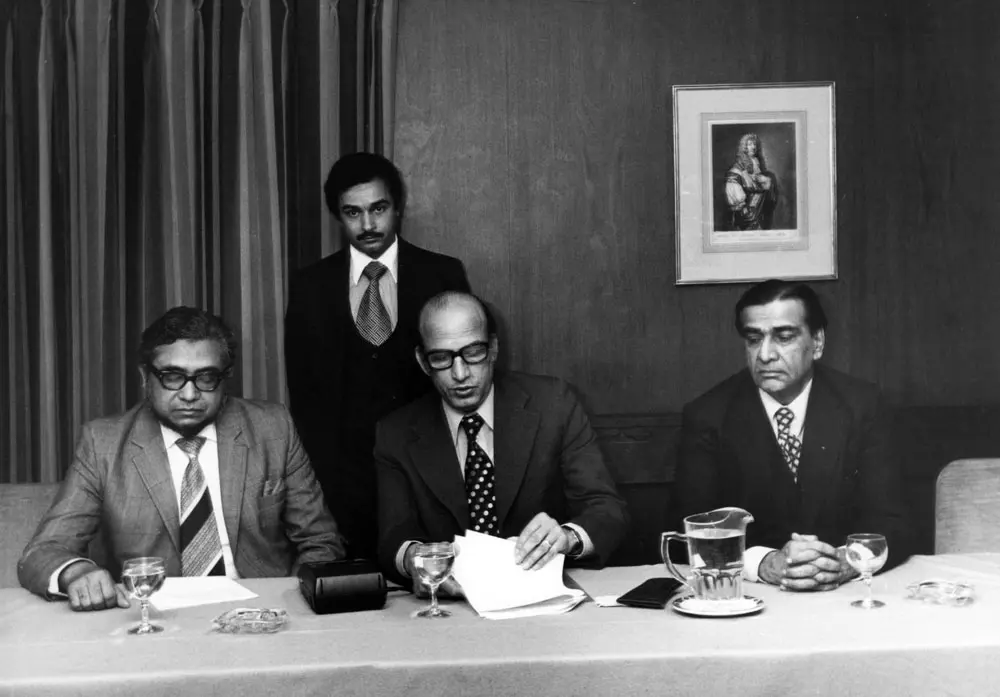
The leading figures of the Islamic Council: Khurshid Ahmad, Salem Azzam, Muazzam Ali
